

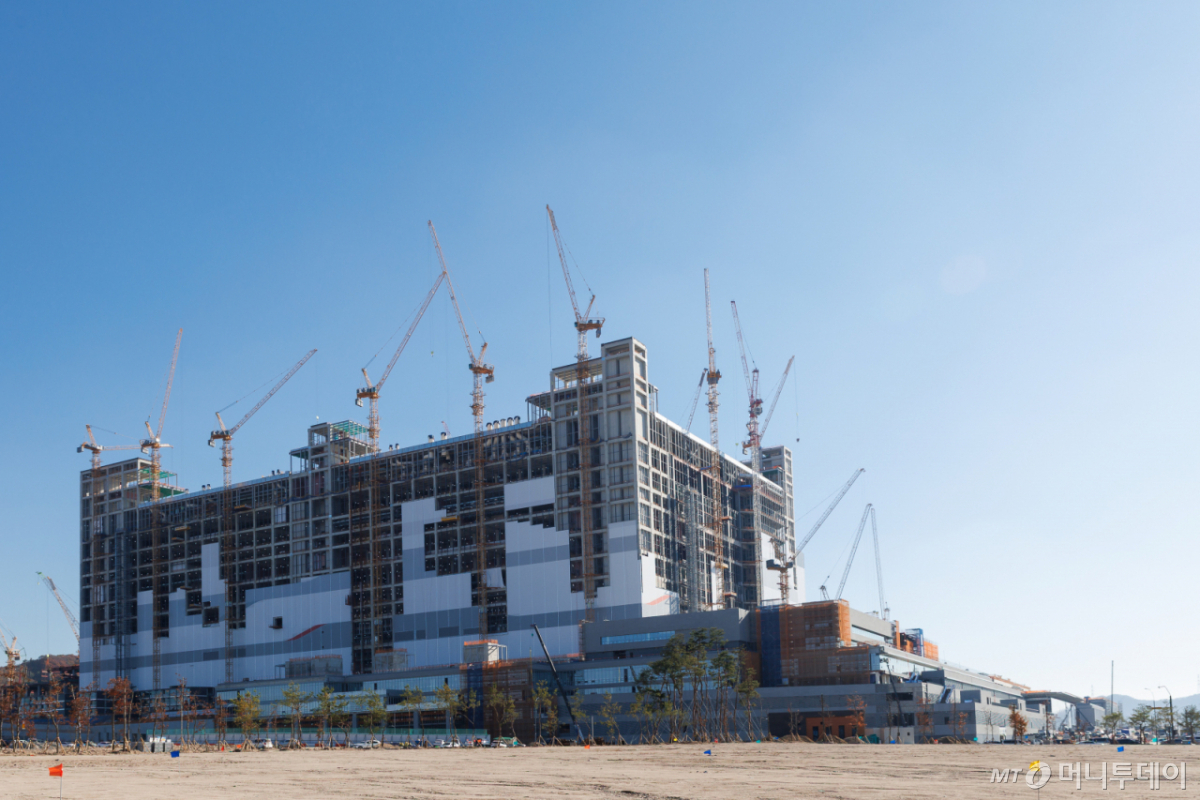
Upon arriving at the SK hynix Semiconductor Cluster (complex industrial park) site in Yongin, Gyeonggi Province on the 10th, the roar of heavy machinery echoed ceaselessly across a construction site spanning 4.15 million square meters (approximately 1.26 million pyeong), an area 1.4 times the size of Yeouido in Seoul. Between more than 10 large tower cranes, the massive exterior of 'Y1,' the cluster's first fab (factory), came into view. Riding the large elevator, or 'Climber,' inside Y1 to the third floor revealed a space measuring 3,305 square meters (approximately 1,000 pyeong). This is where SK hynix's open testbed, the 'Trinity Fab,' will be located.
The Trinity Fab is a facility that verifies the mass production suitability of prototypes developed by materials, components and equipment (hereinafter MCE) companies using 12-inch wafer-based process infrastructure. It is being established with a joint investment of 874.6 billion won from SK hynix, the government, and local governments, targeting an opening in May next year. It is the only open testbed in the world for verifying semiconductor mass production capability. Operations will be managed by the 'Trinity Fab Foundation,' an independent non-profit corporation, to create an environment that protects the technology and intellectual property (IP) of MCE companies and allows them to focus on R&D (research and development).
Yang Ji-dong, Team Leader of SK hynix's Yongin Planning Team, stated, "In a marathon, the final 10-kilometer stretch is called the 'wall of the marathon' because it is the most difficult," emphasizing, "MCE companies also face difficulties in verifying their excellent technologies in actual mass production environments, so the Trinity Fab will help them overcome this final hurdle of mass production application."
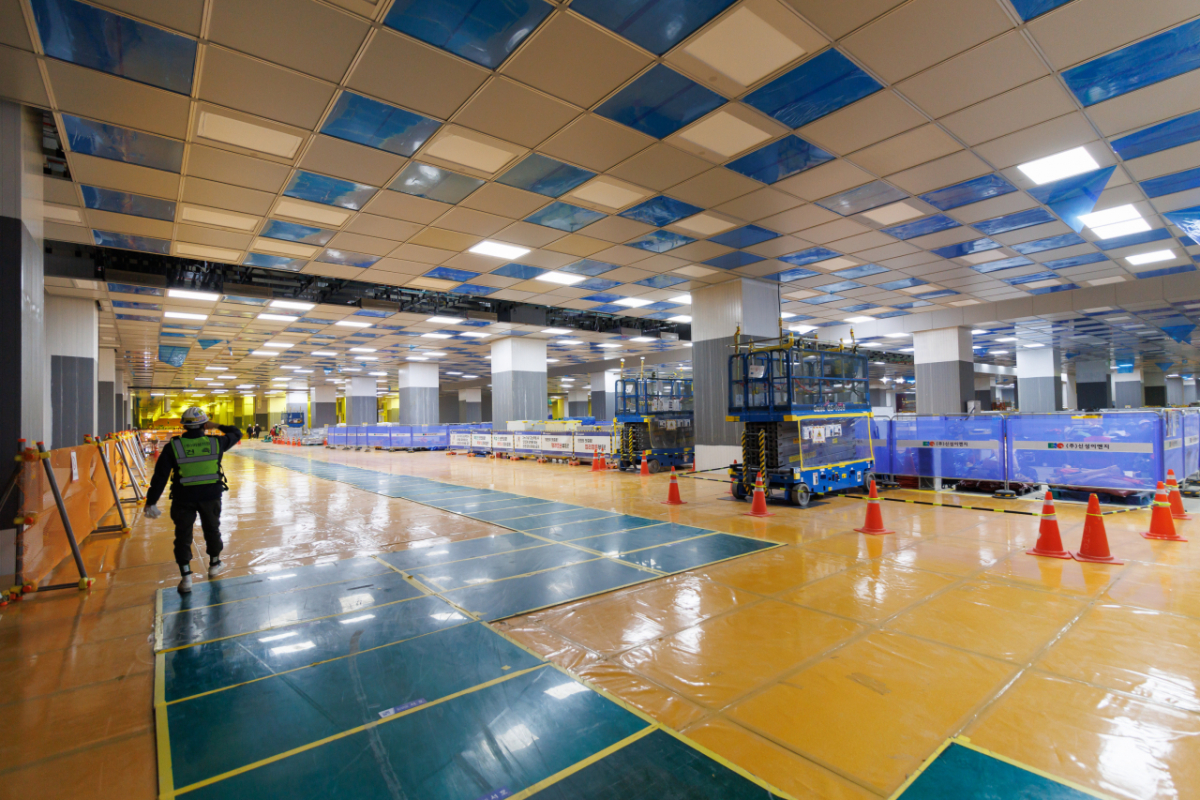
The Trinity Fab will introduce 51 mass production equipment units used in key memory semiconductor (hereinafter memory) processes, including cleaning, CMP (chemical mechanical polishing), thin film deposition, etching, and lithography. Approximately 20% of the total space (about 200 pyeong) will be utilized as rental space for MCE companies. Companies can install their own equipment to continuously verify performance in an environment identical to SK hynix's mass production line. SK hynix will also provide cleanroom maintenance and safety management personnel free of charge.
Until now, small and medium-sized MCE companies have struggled to verify the mass production suitability of their developed equipment and materials due to cost and personnel burdens. This is because large-scale facilities such as cleanrooms and air conditioning systems are required, and it is difficult to independently replicate actual mass production environments given that semiconductor manufacturing involves hundreds of interconnected processes. Lee Jae-ho, Vice Chairman of TES, a semiconductor front-end process equipment company, explained, "Semiconductor equipment specifications for auxiliary devices like pumps vary depending on the installation environment, making verification in an actual mass production line crucial," adding, "By reducing trial and error through the Trinity Fab, it is possible to shorten the equipment development and certification period, which typically takes about five years, by approximately one year."
Near the Yongin Phase 1 fab where the Trinity Fab will be located, an 'MCE Cooperation Complex' of 451,000 square meters (approximately 136,428 pyeong) is being developed to accommodate more than 50 MCE companies. This is expected to become a hub for technological cooperation between semiconductor manufacturers and their partners.
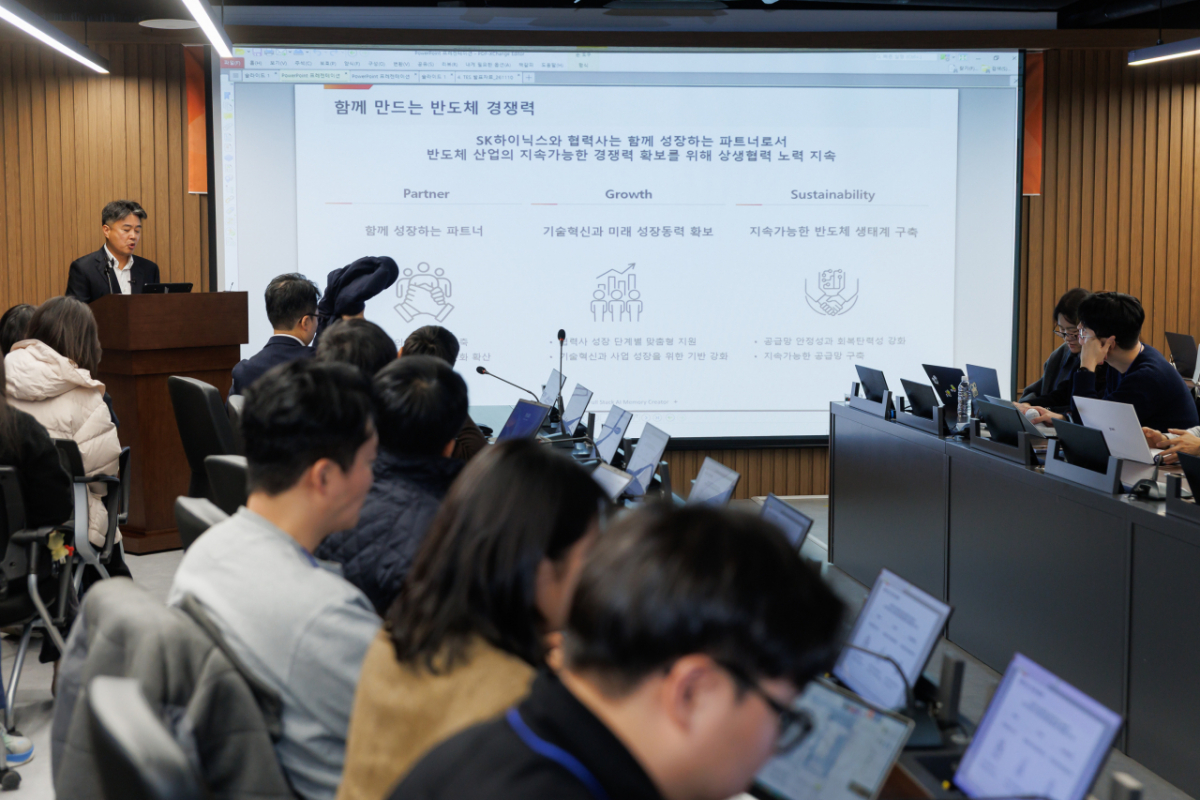
In addition to the Trinity Fab, SK hynix has established a support system tailored to the growth stages of its partners. The plan is to provide customized support from technology development to commercialization. A representative example is the 'R&D Challenge Reward System.' It focuses on reducing the risk burden associated with technology development by providing up to 50% of initial development funds in advance to MCE companies and offering compensation based on results and contribution even if development fails. Initially, SK hynix will help partners develop technologies it requires, with plans to expand the scope of support in the future.
Financial support for the management stability of partners has also been strengthened. This year, SK hynix collaborated with four major commercial banks (KB Kookmin, Shinhan, Hana, Woori) and the Korea Trade Insurance Corporation to introduce 'Export Supply Chain Strengthening Guarantees,' which provide benefits such as expanded loan limits and interest rate reductions for first- to third-tier partners. The interest-free loan program, the 'Payment Support Fund,' was also doubled from 50 billion won to 100 billion won.
Lee Hyun-cheol, Head of Purchasing Strategy at SK hynix, stated, "As global semiconductor hegemony competition intensifies, a 'one team' system where the upstream ecosystem and large corporations move as one is essential," adding, "We will share our process know-how, assets, and capabilities in funding and talent development with the MCE ecosystem to enhance national industrial competitiveness."

 in INDUSTRY


